بررسی تاثیر ویژگیهای توکنهای غیرقابلمعاوضه و تجربه مشتری بر تمایل به خرید در پلتفرم اپنسی

چکیده
هدف: هدف این پژوهش بررسی تاثیر ویژگیهای توکنهای غیرقابلمعاوضه و تجربه مشتری بر تمایل به خرید در پلتفرم اپنسی است. با رشد سریع بازار NFT و توجه هنرمندان و سرمایهگذاران به این داراییهای دیجیتال، شناخت عواملی که بر تصمیم خرید مشتریان اثر میگذارد از اهمیت زیادی برخوردار است.
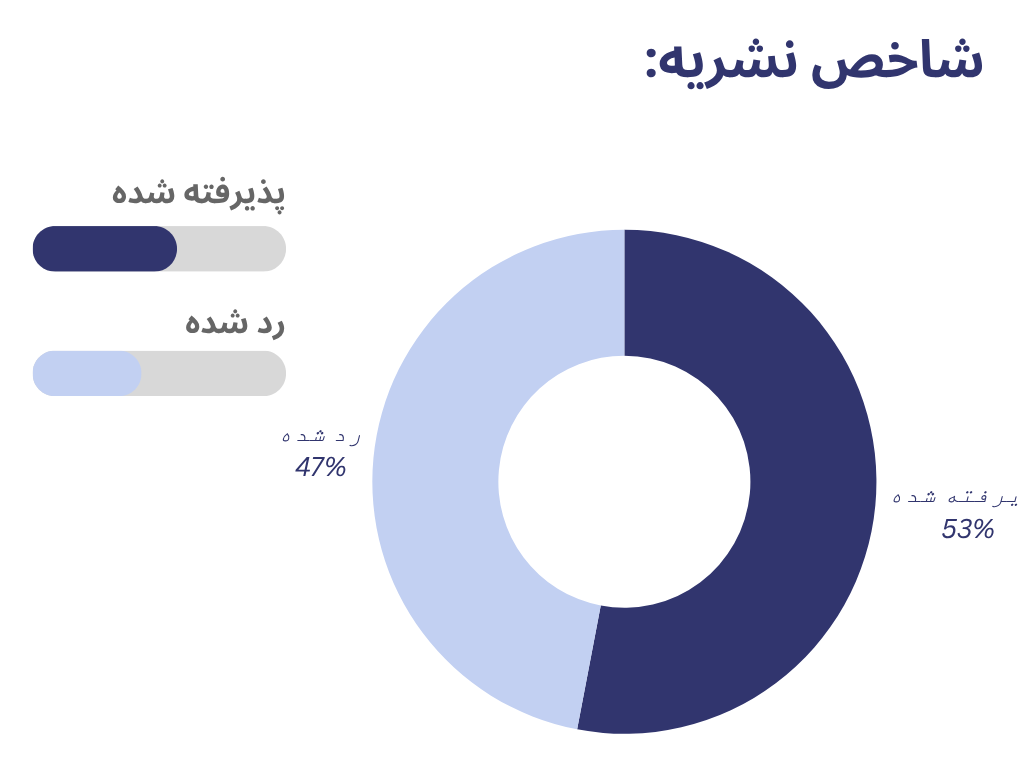
روششناسی پژوهش: پژوهش حاضر از نوع توصیفی–پیمایشی و از نظر هدف کاربردی است. جامعه آماری شامل کاربران فعال پلتفرم اپنسی بوده و دادهها از طریق پرسشنامه جمعآوری شده است. از میان پرسشنامههای توزیعشده، 209 مورد معتبر تحلیل گردید. برای آزمون فرضیات از مدلسازی معادلات ساختاری با نرمافزار SmartPLS استفاده شد و روایی و پایایی ابزار از طریق ضرایب آلفای کرونباخ، پایایی ترکیبی و روایی همگرا و واگرا تایید گردید.
یافتهها: نتایج نشان داد ویژگیهای NFT تاثیر مثبت و معناداری بر تجربه مشتری دارند. همچنین، ریسک درکشده، کمیابی ادراکشده، موقعیت مصرف و گرایش به نوآوری همگی اثر مثبت و معناداری بر تمایل به خرید مشتریان در پلتفرم اپنسی دارند. این نتایج بیانگر آن است که طراحی ویژگیهای منحصربهفرد برای NFTs و تقویت تجربه مشتری میتواند تمایل به خرید را افزایش دهد.
اصالت/ارزشافزوده علمی: این پژوهش از نخستین مطالعاتی است که به بررسی روابط بین ویژگیهای NFT و تجربه مشتری در قالب مدل معادلات ساختاری میپردازد. یافتهها میتواند به کسبوکارها و هنرمندان در توسعه محصولات دیجیتال و ایجاد وفاداری در مشتریان از طریق تجربههای نوآورانه کمک کند.
کلمات کلیدی:
ریسک درکشده، کمیابی درکشده، گرایش به مصرف، گرایش به نوآوری، تجربه مشتریمراجع
- [1] Saberi, S., Kouhizadeh, M., Sarkis, J., & Shen, L. (2019). Blockchain technology and its relationships to sustainable supply chain management. International journal of production research, 57(7), 2117–2135. https://doi.org/10.1080/00207543.2018.1533261
- [2] Ross, D., Cretu, E., & Lemieux, V. (2021). NFTs: Tulip mania or digital renaissance? 2021 IEEE international conference on big data (Big data). IEEE. (pp. 2262–2272). https://doi.org/10.1109/BigData52589.2021.9671707
- [3] AlKhader, W., Jayaraman, R., Salah, K., Sleptchenko, A., Antony, J., & Omar, M. (2023). Leveraging blockchain and NFTs for quality 4.0 implementation in digital manufacturing. Journal of manufacturing technology management, 34(7), 1208–1234. https://doi.org/10.1108/JMTM-05-2023-0172
- [4] Behl, A., Pereira, V., Nigam, A., Wamba, S., & Sindhwani, R. (2024). Knowledge development in non-fungible tokens (NFT): A scoping review. Journal of knowledge management, 28(1), 232–267. https://doi.org/10.1108/JKM-12-2022-0937
- [5] Colicev, A. (2023). How can non-fungible tokens bring value to brands. International journal of research in marketing, 40(1), 30–37. https://doi.org/10.1016/j.ijresmar.2022.07.003
- [6] Aliahmadi, A., Nozari, H., & Ghahremani-Nahr, J. (2022). A framework for IoT and blockchain based on marketing systems with an emphasis on big data analysis. International journal of innovation in marketing elements, 2(1), 25–34. https://doi.org/10.52547/ijime.2.1.25
- [7] Hofstetter, R., de Bellis, E., Brandes, L., Clegg, M., Lamberton, C., Reibstein, D., … ., & Zhang, J. Z. (2022). Crypto-marketing: How non-fungible tokens (NFTs) challenge traditional marketing. Marketing letters, 33(4), 705–711. https://doi.org/10.1007/s11002-022-09639-2
- [8] Mansurali, A., Reddy, K. N., Chakraborty, T., & Jyothish, K. (2025). Metaverse, NFTs, and Web 3.0: Applications, challenges, and future opportunities. In Understanding the metaverse: Applications, challenges, and the future (pp. 45–66). Singapore: Springer Nature Singapore. https://doi.org/10.1007/978-981-97-2278-5_3%0A%0A
- [9] Donovan, A. (2022). The acceptance of NFTs in the art world. Cardozo arts & entertainment law journal, 336. https://larc.cardozo.yu.edu/aelj-blog/336
- [10] Konstantin. (2024). PawNFT: Peer-to-peer lending platform for NFTs on Radix. https://www.radixdlt.com/blog/from-ebc-to-radix-pawnft.
- [11] Ma, Y. M., Zhu, X. H., Cao, P. P., & Li, M. Y. (2024). A method for the competitiveness estimation of the incremental new product through user-generated content. Decision support systems, 179, 114175. https://doi.org/10.1016/j.dss.2024.114175
- [12] Malodia, S., Kaur, P., Ractham, P., Sakashita, M., & Dhir, A. (2022). Why do people avoid and postpone the use of voice assistants for transactional purposes? A perspective from decision avoidance theory. Journal of business research, 146, 605–618. https://doi.org/10.1016/j.jbusres.2022.03.045
- [13] Yoon, N., Choi, D., & Lee, H. K. (2025). Exploring consumer participation in brand metaverse communities, focusing on the metaverse features—fantasy experiences and self-expansion. Journal of consumer behaviour, 24(1), 267–281. https://doi.org/10.1002/cb.2420
- [14] Xie, J., Ye, L., Huang, W., & Ye, M. (2021). Understanding fintech platform adoption: Impacts of perceived value and perceived risk. Journal of theoretical and applied electronic commerce research, 16(5), 1893–1911. https://doi.org/10.3390/jtaer16050106
- [15] Ali, M., Raza, S. A., Khamis, B., Puah, C. H., & Amin, H. (2021). How perceived risk, benefit and trust determine user Fintech adoption: a new dimension for Islamic finance. Foresight, 23(4), 403–420. https://doi.org/10.1108/FS-09-2020-0095
- [16] Laroche, M., McDougall, G. H. G., Bergeron, J., & Yang, Z. (2004). Exploring how intangibility affects perceived risk. Journal of service research, 6(4), 373–389. https://doi.org/10.1177/1094670503262955
- [17] Eastman, J. K., Goldsmith, R. E., & Flynn, L. R. (1999). Status consumption in consumer behavior: Scale development and validation. Journal of marketing theory and practice, 7(3), 41–52. https://doi.org/10.1080/10696679.1999.11501839
- [18] Lins, S., Areias, J., Castro, R., & Aquino, S. (2022). What basic human values influence impulse buying and status consumption. Italian journal of marketing, 2022(2), 233–248. https://doi.org/10.1007/s43039-022-00046-z
- [19] Sestino, A., Guido, G., & Peluso, A. M. (2022). Non-fungible tokens (NFTs): Examining the impact on consumers and marketing strategies. Springer International Publishing. https://books.google.com/books?id=-5p4EAAAQBAJ&printsec=frontcover
- [20] Romano, B., Sands, S., & Pallant, J. I. (2022). Virtual shopping: Segmenting consumer attitudes towards augmented reality as a shopping tool. International journal of retail & distribution management, 50(10), 1221–1237. https://doi.org/10.1108/IJRDM-10-2021-0493
- [21] Brady, M. K., Knight, G. A., Cronin, J. J., Tomas, G., Hult, M., & Keillor, B. D. (2005). Removing the contextual lens: A multinational, multi-setting comparison of service evaluation models. Journal of retailing, 81(3), 215–230. https://doi.org/10.1016/j.jretai.2005.07.005
- [22] Jansri, W. (2018). Consumer perceived value: A systematic review of the research [presentation]. Proceedings of 124th iastem international conference, krakow, poland (pp. 1–6). https://www.academia.edu/94373918
- [23] Luo, B., Li, L., & Sun, Y. (2022). Understanding the influence of consumers’ perceived value on energy-saving products purchase intention. Frontiers in psychology, 12, 640376. https://doi.org/10.3389/fpsyg.2021.640376
- [24] Zarifis, A., & Castro, L. A. (2022). The NFT purchasing process and the challenges to trust at each stage. Sustainability, 14(24), 16482. https://doi.org/10.3390/su142416482
- [25] Ramdani, R. M., Sumarwan, U., & Hermadi, I. (2023). Analisis faktor-faktor yang berpengaruh terhadap sikap pengguna aset digital non-fungible token berbasis blockchain pada komunitas NFT Indonesia. Jurnal Manajemen dan Organisasi, 14(3), 268-286. https://doi.org/10.29244/jmo.v14i3.46793
- [26] Rafli, D. P. A. D. (2022). NFT Become a copyright solution. Journal of digital law and policy, 1(2), 87–96. https://doi.org/10.58982/jdlp.v1i2.166
- [27] Afkhami, M., & Bahar, M. (2024). Integration of cyber culture and public interests (Case study: NFT Introspect Startup and NFT collections). Journal of sociology of culture and art, 5(5), 68-85. (In Persian). https://www.magiran.com/paper/2708007
- [28] Haddadi, S., & Mozafari, M. (2023). A legal introduction to crypto tokens ICO through blockchain technology. Economic and commercial law researches, 1(1), 125-156. (In Persian). https://doi.org/10.48308/eclr.2023.103410
- [29] Mohajer, S. M. (2022). NFT Marketing: How to Use Non-Fungible Tokens in Advertising Campaigns. Brand-creating monthly magazine, 3(36). (In Persian). https://B2n.ir/sj6591
- [30] Fornell, C., & Larcker, D. F. (1981). Evaluating structural equation models with unobservable variables and measurement error. Journal of marketing research, 18(1), 39–50. https://doi.org/10.1177/002224378101800104
- [31] Chin, W., & Marcoulides, G. (1998). The partial least squares approach to structural equation modeling. Modern methods for business research, 8. https://www.jstor.org/stable/pdf/249674.pdf?refreqid=excelsior%3Ac8b2bd4af35e73%0A0c294bf94a088d8290
- [32] Henseler, J., Ringle, C. M., & Sinkovics, R. R. (2009). The use of partial least squares path modeling in international marketing. In New challenges to international marketing (pp. 277–319). Emerald Group Publishing Limited. https://doi.org/10.1108/S1474-7979(2009)0000020014
- [33] Cohen, J. (1988). Statistical power analysis for the behavioral sciences. Routledge. https://doi.org/10.4324/9780203771587
- [34] Afzal, S., Maqsood, M., Khan, U., Mehmood, I., Nawaz, H., Aadil, F., … , & Nam, Y. Alzheimer disease detection techniques and methods: A review. International journal of interactive multimedia and artificial intelligence. https://doi.org/10.9781/ijimai.2021.04.005
- [35] Habiba, S., & Khosravi, H. (2024). Feasibility of applying “Infringement” in minting non-fungible tokens arising from trademarks. Private law, 20(2), 181-194. (In Persian). https://ensani.ir/fa/article/574805/
- [36] Simon, E., Zsidó, A. N., Birkás, B., & Csathó, Á. (2022). Pain catastrophizing, pain sensitivity and fear of pain are associated with early life environmental unpredictability: A path model approach. BMC psychology, 10(1), 97. https://doi.org/10.1186/s40359-022-00800-0
- [37] Mirashrafi, A. H. (2022). Investigating the impact of blockchain technology on the use of non‐fungible tokens (NFTs) and investments in them. Journal of modern banking studies, 5(17), 7–27. https://www.magiran.com/p2601649
دانلود
چاپ شده
شماره
نوع مقاله
ارجاع به مقاله





 شماره 1